


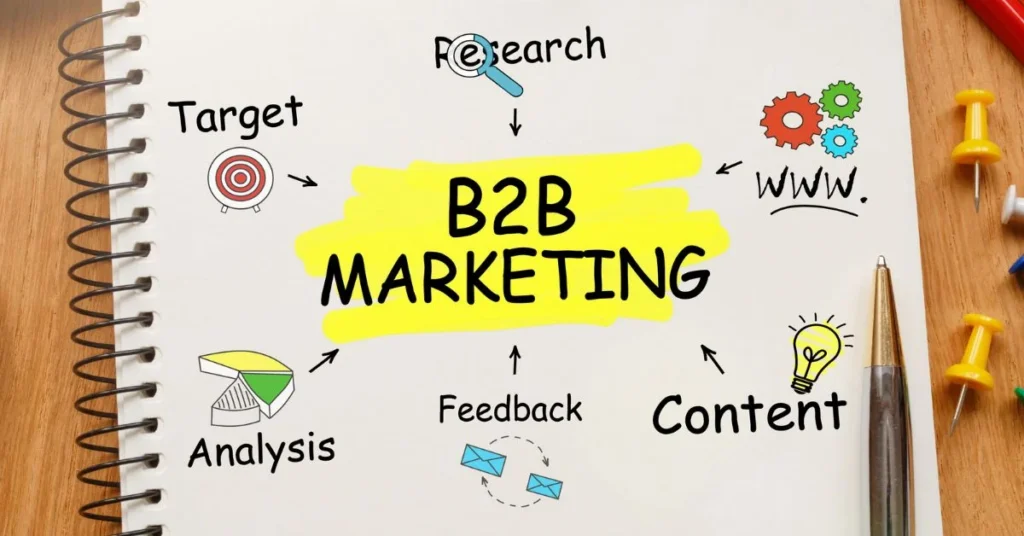
B2B SEO marketing works differently from consumer search, because business buyers are careful, slow and rarely alone. Committees compare options online for weeks before anyone fills out a form. That makes B2B search engine optimization less about raw volume and more about being useful at every step. This listicle covers nine tactics that help SEO for B2B companies attract qualified leads, from page types and technical basics to email, social and measurement. Use it as a checklist, whether you run SEO in-house or with a partner.
Quick Answer
B2B SEO marketing means building search visibility around how business buyers research, using solution pages, comparison content, proof, technical health, authority and measurement tied to qualified leads. Start with the pages closest to revenue, and expect results over months. No provider can guarantee rankings or lead counts.
Key Takeaways
- Buyers research heavily online before they ever talk to sales.
- Pages closest to revenue, such as solution and comparison pages, deserve attention first.
- Proof, authority, and technical health make every other page work harder.
- Email and social can extend what search starts.
- Judge success by qualified leads and pipeline, not traffic alone.
How to use this list
You do not need to do all nine tactics at once, and the table below suggests where to begin.
Pick the row that matches your situation, finish that tactic, then move down the list as results justify it.
1. Map keywords to the buying committee
Start by listing who is involved in a purchase and what each person searches.
Gartner research, from a survey of 750 B2B customer stakeholders, found buyers spend only about 17% of their buying time meeting with suppliers. The rest goes to research, internal discussion and validation. That means a finance reviewer, a technical lead and an executive may all search differently. Interview your sales team, collect the exact phrases prospects use, and group keywords by role and stage. Those phrases often reveal terms that keyword tools undervalue.
Revisit this map twice a year. Roles change, new competitors appear and buyers adopt new phrases, so a fresh look keeps your plan honest.
2. Build strong solution and service pages first
Solution pages are the closest thing to a revenue page in B2B search, so they should be your first investment.
Each page should explain who the offer is for, the problem it solves, how it works and what happens next. Avoid vague claims and jargon. A focused page for each core service usually beats one broad page that tries to cover everything. This is also the foundation of effective SEO lead generation services, because inquiries tend to come from pages that match a specific need.
Add a clear call to action and a short form. A visitor who is ready to talk should never have to hunt for the next step.
3. Publish comparison and alternatives content
Comparison pages capture buyers who are already narrowing their shortlist.
Think “option A versus option B,” “in-house versus outsourced” or “what to look for in a provider.” Be fair and specific, and explain who each choice suits, including when your own offer is not the best fit. Honest comparisons build trust, and they answer questions a sales rep would otherwise handle in a meeting. Update them regularly so details stay accurate.
Use simple tables where they help. Side-by-side layouts are easy to scan, and they give search engines a clean structure to read.
4. Add proof pages that reduce risk
Business buyers need evidence they can show to colleagues, so case studies and process pages matter.
Share the problem, the approach, the timeline and the measured outcome, but only with facts you can support and permission to publish. If you lack client stories yet, publish detailed process pages, team credentials and clear descriptions of how you work. Never invent results. Buyers notice vague proof quickly, and it can cost you credibility.
Quotes from real clients, with permission, add a human voice. Even a short, specific comment about communication or process can help a cautious buyer feel safer.
5. Fix the technical foundation
Technical health helps every page get found, crawled and trusted.
Check page speed, mobile layout, indexing, duplicate pages and broken links. Large B2B sites often carry outdated pages that confuse search engines, so cleanup can create early gains without writing anything new. Our guide to website optimization covers the basics in plain language. Review these items every quarter, since sites change constantly.
Document what you change. A simple log helps new team members and makes it easier to spot which fix moved the numbers.
6. Use internal links to guide research
Internal links help buyers and search engines move from broad topics to specific solutions.
Link educational guides to related solution pages, and link solution pages to proof and comparison content. Use descriptive anchor text that tells readers what they will find. Avoid stuffing links into every paragraph, since too many can feel pushy. A small, well-chosen set of links creates a clear path and keeps visitors exploring.
Check for orphan pages that nothing links to. They are easy to miss, and a single link from a related page can bring them back into view.

7. Earn authority through real mentions
Authority comes from useful work that others want to reference, not from bought links.
Original research, practical templates, partner pages and expert commentary can all earn mentions from industry sites. Reach out only when you have something valuable to share. Avoid link schemes, which can lead to penalties. A handful of relevant mentions usually helps more than dozens of weak ones, so focus on quality.
Partner and integration pages are often overlooked. If another company lists you as a partner, that reference can be both useful for buyers and relevant for search.
8. Combine search with email and social
Search brings people in, and email and social help you stay in front of them while they decide.
Many B2B visitors are not ready on the first visit, so offer a useful resource and a simple follow-up sequence. This guide to email automation workflows for lead generation shows how that can work. On social, a strong social media marketing agency or in-house team can share your guides and proof to reach decision makers. If you are comparing partners, this checklist on choosing a social media marketing agency that delivers results is a useful starting point.
Keep messages consistent across channels. A buyer who sees the same clear promise in search, email and social tends to trust it more.
9. Measure pipeline, not just traffic
Measure qualified leads, opportunities and revenue influenced, then use traffic as a supporting signal.
Connect analytics to your CRM so you can see which pages and queries lead to real conversations. Ask sales which leads were useful and feed that back into your plans. Attribution will never be perfect, because B2B journeys involve several people and channels. A reasonable picture beats a perfect number you never get. For a wider view of how channels fit together, read about digital marketing solutions for B2B companies, which fits naturally alongside internet marketing services like paid media and email.
Hold a short monthly review with sales and marketing together. Shared context turns raw numbers into decisions, and it keeps SEO tied to what the business actually needs.
Ready to talk it through
If you want help deciding which tactics fit your goals and budget, a short conversation is a good first step. Premier offers a free consultation where we review your site and suggest a sensible order of work.
Bring your current reports and any sales questions that keep coming up, and we can look at them together.
Frequently Asked Questions
1. What is B2B SEO marketing?
It is the practice of improving search visibility for companies that sell to other businesses. The focus is on qualified leads, long research cycles and multiple decision makers.
2. How is B2B search engine optimization different from B2C?
B2B buyers research longer and involve more people. Search volume is often lower, but each lead is usually worth more.
3. How long does SEO for B2B companies take to work?
Many companies see gradual progress over several months. Long sales cycles can delay the revenue impact even further.
4. Do SEO lead generation services replace sales outreach?
No. They support sales by helping qualified buyers find you and understand your offer before they talk to your team.
5. Should B2B companies use social media too?
Often yes, especially to share guides and proof with decision makers. It works best when it supports your search content and email follow-up.
6. Can anyone guarantee B2B SEO results?
No. Search engines, competitors and buyer behavior all change, so guarantees are a warning sign