We are a team of creative thinkers and marketing strategists, dedicated to bringing your vision to life. Through our partnerships, we can achieve remarkable results together. Our custom solutions are tailored to meet your unique needs.
We are a team of creative thinkers and marketing strategists, dedicated to bringing your vision to life. Through our partnerships, we can achieve remarkable results together. Our custom solutions are tailored to meet your unique needs.
Pricing is the question every small business owner asks before picking up the phone to call an agency. And it's a fair one. You're running a lean operation, every dollar has a job to do, and the last thing you want is to sink money into marketing that doesn't move the needle. The problem is that most pricing guides online either give you vague ranges or outdated numbers that don't reflect what the market actually looks like today.
So here's a straightforward breakdown of what digital marketing costs for small businesses in 2026 -by channel, by budget tier, and with context for what actually drives those numbers. Whether you're spending $500 a month or $5,000, this guide will help you understand what you're buying and whether it's worth it.
What Determines Digital Marketing Pricing?
Before jumping to numbers, it's worth understanding why pricing varies so widely. Two businesses can pay completely different amounts for "SEO" and both be getting fair deals -because the scope, competition, and goals are different.
The main factors that influence cost include your industry and how competitive the search landscape is, your geographic target area (local vs. national vs. multi-state), which services you actually need, and whether you're hiring an agency, a freelancer, or building an in-house team. A local HVAC company targeting one metro area has very different needs -and costs -compared to a B2B software firm trying to rank nationally.
Another factor that's become more prominent in 2026 is AI visibility. AI-powered search tools like ChatGPT, Perplexity, and Google's AI Overviews have changed where consumers find information. Getting cited in those AI-generated answers requires content strategy, authoritative backlinks, and structured data work -none of which are free. Agencies that offer GEO (Generative Engine Optimization) alongside traditional SEO will typically charge more, but the visibility payoff is measurable. That's why investing in a proper SEO, AEO & GEO strategy is increasingly considered table stakes rather than a premium add-on.
SEO: What Small Businesses Actually Pay
Search engine optimization is usually the first service small businesses explore, and the pricing range is genuinely wide. Here's how it breaks down in 2026:
Budget tier ($500–$1,500/month): You'll typically get basic on-page optimization, some keyword tracking, and maybe one or two content pieces per month. This works for very small local businesses in low-competition markets. Don't expect fast ranking gains in competitive cities or industries.
Mid-range tier ($1,500–$3,500/month): This is where most small businesses with real growth goals should be. At this level, you get consistent content creation, link building, technical SEO audits, and reporting. If you're targeting a metro area with real competition, this is the realistic minimum for moving the needle.
Growth tier ($3,500–$7,000+/month): Full-service SEO with content strategy, AI visibility optimization, regular backlink campaigns, and custom reporting dashboards. Businesses in legal, healthcare, home services, or other competitive verticals typically need this level.
One important note: SEO is a long-term investment. Most campaigns take three to six months before meaningful results appear in rankings and traffic. Agencies that promise fast results for very low prices are usually selling something that won't hold up.
Paid Advertising: Costs and What to Expect
Paid ads -Google, Facebook, Instagram, YouTube -are the channel most people think of when they hear "digital marketing." With paid ads, you're paying two separate things: the ad spend (what goes to the platform) and the management fee (what goes to the agency or specialist running the campaigns).
For small businesses, a reasonable starting point is $500–$1,500/month in ad spend per platform, with agency management fees running $500–$1,500/month on top of that. So a basic Google Ads campaign managed by an agency might cost $1,000–$3,000 all-in monthly.
What you get for that spend depends heavily on how well the campaigns are built and optimized. Poorly structured ads burn budget fast. A well-run campaign for a home services business targeting a specific metro area can generate leads for $20–$80 each, depending on the service. Competitive sectors like legal or insurance run significantly higher.
The businesses that get the most from paid ads are the ones who treat it as a system -not a set-it-and-forget-it activity. Ongoing optimization, audience testing, and creative refreshes are what separate campaigns that scale from ones that plateau. If you're evaluating agencies that offerpaid media and PPC management, ask specifically how often they optimize and what their reporting cadence looks like.
Social Media Marketing: Realistic Budgets
Social media management is often underpriced by small businesses and over-scoped by agencies. Here's what realistic pricing looks like:
DIY or freelancer level ($300–$800/month): You might get basic posting and scheduling across two or three platforms. Limited strategy, minimal design work.
Agency-managed ($800–$2,500/month): Includes content strategy, custom graphic design, caption writing, posting, community management, and monthly reporting. This is where social becomes an actual growth channel rather than just a presence.
Full-service with video and influencer work ($2,500–$5,000+/month): For businesses that want video reels, influencer collaborations, and sophisticated ad-boosting strategies layered on top of organic content.
Keep in mind that organic social media -posts you don't pay to boost -is valuable for brand trust and community, but it rarely drives significant lead volume on its own. For direct lead generation, social media works best when paired with a paid component.
Web Design: One-Time Costs That Affect Everything
Your website isn't a marketing service in the recurring sense, but it affects every other channel. A slow, outdated, or confusing site will kill the results from your SEO and paid ads investments.
For small businesses in 2026, professional web design typically runs:
Basic custom site (5–8 pages): $2,500–$6,000 one-time
Mid-tier custom site with CMS, integrations, and SEO setup: $6,000–$15,000
Full e-commerce or complex functionality: $15,000–$40,000+
Template-based builds using platforms like Squarespace or Wix cost far less upfront but have performance and customization limitations that often create problems down the road -especially for SEO. If your business depends on online lead generation, investing in a properly built site pays for itself faster than most business owners expect. You can explore what goes into a high-performance build through Premier Marketing's web design services.
What Should a Small Business Budget Overall?
The honest answer is that there's no universal number. But here's a practical framework:
Most financial advisors suggest businesses spend 7–12% of gross revenue on marketing. For a business doing $500,000 annually, that's $35,000–$60,000 per year, or roughly $2,900–$5,000 per month.
If you're just starting out or your revenue is lower, the goal is to allocate budget to the channels most likely to generate leads in your market. For most local service businesses, that's a combination of local SEO and a modest paid ads budget. For B2B companies, content-driven SEO and LinkedIn tend to outperform everything else. If you want to see real-world results across different industries, browsing client case studies gives you a sense of what strategic spend looks like in practice.
One smart move before committing to any budget: get a free audit. Understanding where your current website and SEO stand gives you a baseline, so you know if you're starting from scratch or just optimizing what's already working. You can request a free market or SEO analysis to get that clarity without any obligation.
The businesses that scale their marketing successfully aren't always the ones with the largest budgets. They're the ones who start with clear goals, pick the right channels for their market, and hold their agency accountable for results.
FAQs
How much should a small business spend on digital marketing per month?
Most small businesses spend between $1,500 and $5,000 per month on digital marketing depending on their goals, industry, and how competitive their market is. A good rule of thumb is 7–12% of gross revenue, though businesses in growth mode often invest more aggressively. The key is matching budget to realistic goals rather than picking a number that feels safe.
Is SEO worth it for small businesses in 2026?
Yes -but only if you have realistic timeline expectations and invest enough to compete in your market. Budget SEO campaigns under $500/month rarely produce meaningful results in competitive markets. A properly funded SEO strategy that includes content creation, link building, and AI visibility optimization remains one of the best long-term investments a small business can make.
What's the difference between ad spend and agency management fees?
Ad spend is the money that goes directly to the ad platform -Google, Meta, YouTube -to serve your ads. The management fee is what you pay the agency or specialist to build, monitor, and optimize those campaigns. Both are separate costs. A $1,000/month paid ads budget plus a $750/month management fee means your total monthly investment is $1,750.
Can a small business do digital marketing without an agency?
Yes, and many do -especially early on. Platforms like Google Ads and Meta Ads have self-serve interfaces, and there are plenty of SEO tools available. The tradeoff is time. Business owners who manage their own marketing usually spend 10–20 hours per week on it, and results tend to be slower without specialist expertise. Agencies earn their fee by doing it faster and better.
How does AI search change digital marketing costs in 2026?
AI search tools have added a new layer to marketing strategy. Getting cited in AI-generated answers requires authoritative content, structured data, and credible backlinks -work that goes beyond traditional SEO. Some agencies now bundle GEO (Generative Engine Optimization) into their SEO packages at no extra cost; others charge a premium. Either way, it's worth asking any agency you evaluate how they approach AI visibility specifically.
What's the cheapest effective digital marketing strategy for a small business?
Local SEO combined with a well-optimized Google Business Profile is typically the most cost-effective starting point for local service businesses. It doesn't require ad spend, builds long-term visibility, and directly targets people in your area who are actively searching for what you offer. From there, adding a small paid ads budget amplifies results faster than organic work alone.
Time To Start A New Project!
Partner with Premier Marketing to grow your business.
Our social media campaign management services can help you build relationships, engage with your audience, and drive conversions. Let’s work together to create a strategy that helps your business grow.

 Explore how we helped our client achieve their goals.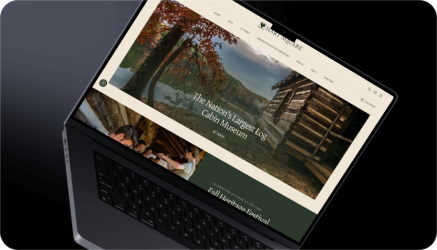
 We’re currently away, but we’d still love to hear from you!


