We are a team of creative thinkers and marketing strategists, dedicated to bringing your vision to life. Through our partnerships, we can achieve remarkable results together. Our custom solutions are tailored to meet your unique needs.
We are a team of creative thinkers and marketing strategists, dedicated to bringing your vision to life. Through our partnerships, we can achieve remarkable results together. Our custom solutions are tailored to meet your unique needs.
If you've ever Googled "what does a digital marketing agency do" and ended up more confused than when you started, you're not alone. The term gets thrown around a lot, but the actual scope of work -what agencies handle day-to-day, how they grow businesses, and why their role looks completely different in 2026 than it did even two years ago -rarely gets explained clearly. So let's fix that.
A digital marketing agency helps businesses grow their online presence, attract more customers, and convert that attention into revenue. That's the short answer. But in 2026, the work is far more layered. Search behavior has shifted dramatically -AI tools like ChatGPT, Gemini, and Perplexity are answering questions that used to route to Google. That means agencies aren't just chasing rankings anymore. They're building brand authority across multiple platforms, making sure businesses show up wherever their customers are looking -including inside AI-generated answers.
What Services Does a Digital Marketing Agency Provide?
Most full-service agencies offer a core stack of services that work together. Think of it less like a menu and more like an engine -pull one piece out and the whole thing runs less efficiently.
Search Engine Optimization (SEO) is the foundation. Agencies research the keywords your customers are searching, optimize your website's content and structure, build backlinks from credible sites, and track how you rank over time. In 2026, this also includes AEO (Answer Engine Optimization) -structuring content so AI tools cite your business in their responses -and GEO (Generative Engine Optimization), which focuses on making your brand a trusted source that AI models reference. If you want your business to show up when someone asks ChatGPT for a recommendation, GEO is the discipline that gets you there. You can learn more about how that works through a dedicated SEO, AEO & GEO service.
Paid advertising covers Google Ads, Facebook and Instagram campaigns, YouTube pre-rolls, and increasingly, programmatic and geofencing campaigns that serve ads to people in a specific physical location. Good agencies don't just run ads -they monitor performance in real time, cut what's wasting budget, and scale what's working. Paid media management is one of the fastest ways to generate leads when it's set up correctly.
Web design and development is often where a client relationship starts. Your website is your digital storefront. If it's slow, confusing, or looks dated, traffic won't convert -and search engines won't trust it either. Agencies build sites that are fast, mobile-optimized, and structured in ways that support SEO from day one.
Social media marketing handles the strategy, content creation, and day-to-day management of your profiles. That includes writing captions, designing graphics, scheduling posts, and responding to comments. For some businesses, social is their top lead source. For others, it's primarily a brand trust signal -proof to new customers that you're active and credible.
Branding rounds out most full-service offerings. This means your logo, color palette, messaging guidelines, and overall visual identity. Agencies that handle branding alongside marketing have a significant advantage: the ads, website, and content all pull in the same direction because they were built from the same foundation.
How Do Agencies Actually Drive Business Growth?
The real value of a good agency isn't any single service -it's the strategy that connects them. Here's how a well-run engagement typically looks:
First, the agency audits where you are. They look at your website performance, your current search rankings, your paid ad accounts, and your competitors. This tells them where the gaps are and where the fastest wins likely live.
From there, they build a plan. Not a generic playbook, but one based on your market, your goals, and your timeline. A local home services company needs a very different approach than a B2B software firm. Reputable agencies understand this -and they'll tailor the strategy accordingly. That's why many agencies segment their work by industry, with dedicated approaches for sectors like home services, legal, healthcare, and B2B.
Then comes execution. Content gets written, ads get launched, pages get optimized, and reporting gets set up so you can see what's actually happening. Premier Marketing, for example, builds custom analytics dashboards for clients so nothing is buried in a spreadsheet that no one checks.
The final piece is ongoing optimization. Digital marketing is not a set-it-and-forget-it activity. Campaigns need to be adjusted as data comes in. New competitors enter the market. Google updates its algorithm. AI search tools change how queries get answered. Agencies stay on top of this so you don't have to.
Why AI Visibility Matters More Than Ever in 2026
This is arguably the biggest shift in digital marketing right now. When someone asks an AI assistant "what's the best marketing agency near me" or "how do I grow my business online," the AI doesn't scroll through Google results and hand the user a list of blue links. It synthesizes information from across the web and delivers a direct answer -often without the user clicking anywhere.
If your business isn't cited in those answers, you're invisible to a growing slice of your potential customers. Studies suggest that AI-generated answers now influence purchasing decisions for a significant percentage of consumers, particularly for professional services, healthcare, and home services queries.
Getting cited by AI tools requires a combination of things: authoritative content that directly answers real questions, backlinks from credible sources, structured data markup that helps AI parse your information accurately, and a consistent presence across multiple platforms. This is precisely why GEO has become a core discipline rather than a bonus add-on. The agencies leading in 2026 are building content strategies that optimize for both Google rankings and AI citations simultaneously.
What Should You Look for When Hiring an Agency?
Not all agencies are built the same. Here are a few things worth evaluating before you sign anything.
Transparency in reporting. You should be able to see exactly where your budget goes and what results it produced. If an agency is vague about this, that's a red flag.
Integrated capabilities. Agencies that handle SEO, paid ads, content, and web in-house can build cohesive strategies. Agencies that outsource most work often struggle with quality control and communication.
Industry experience. An agency that has worked with businesses in your space will understand your customer, your competitive landscape, and what channels actually convert. Looking at real case studies and past work is one of the best ways to evaluate this.
Clear communication. How responsive is the team? Do they explain things in plain language or hide behind jargon? Your agency should feel like a genuine partner, not a vendor you have to chase.
If you're not sure where to start, a free market analysis or SEO audit is a low-stakes way to see what's actually going on with your current online presence before committing to anything.
Conclusion
A digital marketing agency does a lot more than post on social media or run Google ads. In 2026, the best agencies are managing your entire digital ecosystem -building the kind of brand authority that earns trust from both human customers and the AI tools they're increasingly relying on to make decisions. The right agency brings strategy, creative execution, and data-driven optimization under one roof, so your growth compounds instead of stalling.
If you're evaluating agencies or just trying to understand what you actually need, start with a clear picture of where you are today -and find a partner willing to show you exactly how they'll get you where you want to be.
FAQs
What does a digital marketing agency do on a day-to-day basis?
Day-to-day work varies by service, but it typically includes monitoring and adjusting paid ad campaigns, publishing and optimizing content, tracking keyword rankings, managing social media accounts, and reporting on performance. Behind the scenes, agencies are also doing research, building links, updating websites, and strategizing for the next phase of a client's growth.
How is a digital marketing agency different from a traditional advertising agency?
Traditional advertising agencies focus on offline channels like print, TV, radio, and billboards. Digital marketing agencies focus on online channels -search engines, social media, email, paid digital ads, and content. Many modern agencies handle both, but a true digital agency is built around data, trackable ROI, and online audience behavior.
How long does it take to see results from a digital marketing agency?
It depends on the channel. Paid advertising can generate leads within days of launching. SEO typically takes three to six months to show meaningful movement, though early improvements in traffic often appear sooner. Branding and web redesign changes tend to have immediate perceptual impact. A good agency will set honest timelines from day one.
What is AI visibility, and why does it matter for my business?
AI visibility refers to how prominently your business appears in answers generated by AI tools like ChatGPT, Gemini, and Perplexity. These tools are increasingly used to find recommendations, service providers, and product information. If your brand isn't being cited in those answers, you're missing a fast-growing segment of search behavior.
How much does a digital marketing agency cost?
Pricing varies widely based on the scope of services, agency size, and your market. Smaller retainers for single-channel work (like SEO-only) might start around $1,000–$2,500 per month. Full-service engagements covering SEO, paid ads, content, and social media typically range from $3,000 to $10,000 or more monthly. Always ask for a breakdown of what's included.
Can a digital marketing agency help a small business compete with larger companies?
Yes -and this is one of the clearest advantages of digital marketing. A well-executed SEO and content strategy can put a small business on the first page of Google above much larger competitors. Targeted paid ads let you reach exactly the right customers without a massive budget. AI visibility strategies level the playing field even further, since being cited depends on content quality and authority rather than ad spend alone.
Time To Start A New Project!
Partner with Premier Marketing to grow your business.
Our social media campaign management services can help you build relationships, engage with your audience, and drive conversions. Let’s work together to create a strategy that helps your business grow.

 Explore how we helped our client achieve their goals.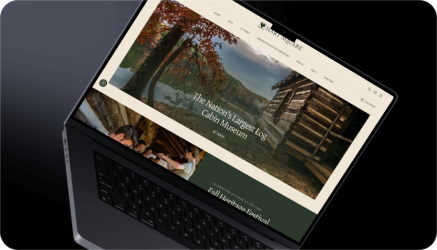
 We’re currently away, but we’d still love to hear from you!