We are a team of creative thinkers and marketing strategists, dedicated to bringing your vision to life. Through our partnerships, we can achieve remarkable results together. Our custom solutions are tailored to meet your unique needs.
We are a team of creative thinkers and marketing strategists, dedicated to bringing your vision to life. Through our partnerships, we can achieve remarkable results together. Our custom solutions are tailored to meet your unique needs.
Search has changed more in the last two years than it did in the previous decade. You're no longer just competing for a spot on Google's first page -you're competing to be cited by AI tools, spoken aloud by voice assistants, and surfaced in answer boxes that millions of people never click past. Three acronyms now define the modern visibility conversation: SEO, AEO, and GEO. If you're not clear on what each one does and how they interact, you're likely optimizing for a search landscape that no longer exists.
Let's break them down -clearly, practically, and without the fluff.
What Is SEO, and Is It Still Relevant?
Search Engine Optimization has been the cornerstone of digital marketing for over two decades. At its core, SEO is the practice of improving your website's visibility in organic search results -primarily Google, but also Bing and others. That means working on your technical site health, building authoritative backlinks, optimizing on-page content for keywords, and earning trust signals over time.
In 2026, SEO is absolutely still relevant. Google processes billions of searches every day, and ranking well still drives enormous amounts of traffic. But the nature of that traffic has shifted. Google's AI-powered search features -including AI Overviews and the Search Generative Experience -now answer many queries before users even reach the traditional blue links. That doesn't kill SEO; it raises the bar.
To win at SEO today, your content needs to be more than keyword-stuffed pages. Google's ranking systems increasingly favor content that demonstrates real expertise, thorough coverage of a topic, and genuine value to readers. If you've been investing in small business SEO services built around depth and authority rather than shortcuts, you're already heading in the right direction. Thin, templated content that worked five years ago is actively penalized now.
One thing that hasn't changed: technical SEO still matters enormously. Site speed, crawlability, structured data, and mobile performance are still foundational -and they directly feed into how well you perform in both AEO and GEO, which we'll get to shortly.
What Is AEO, and Why Do Voice Searches Change Everything?
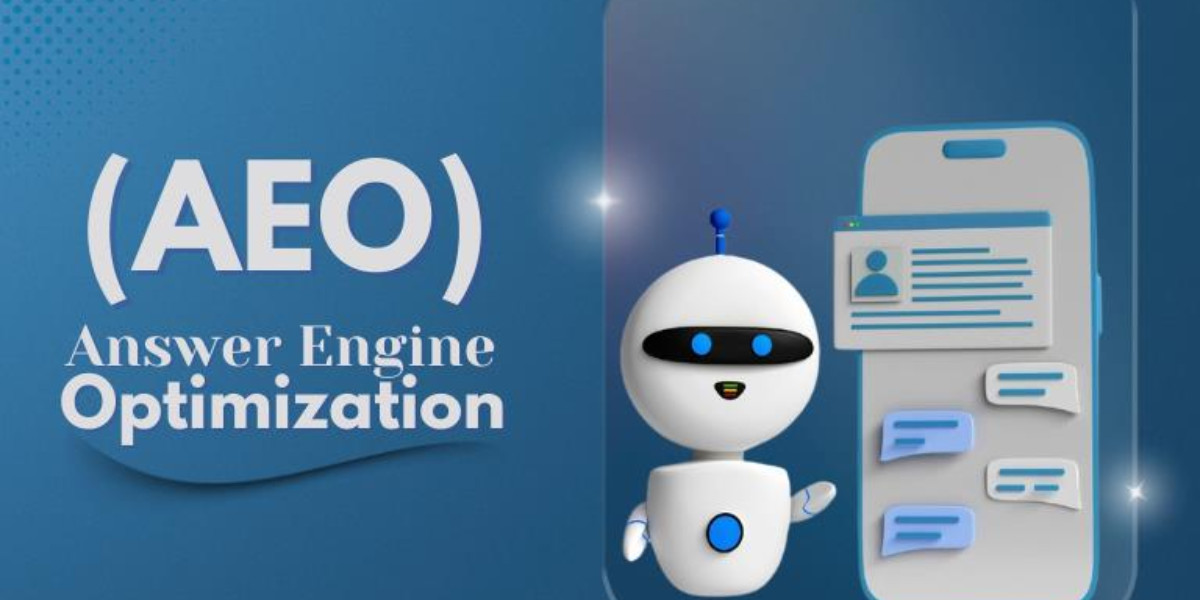
Answer Engine Optimization is what happens when you shift your focus from ranking on a results page to becoming the actual answer. AEO is designed to get your content featured in zero-click results -things like Google's featured snippets, the "People Also Ask" boxes, and voice assistant responses from tools like Siri, Alexa, and Google Assistant.
Here's why this matters: when someone asks their phone "what's the best way to reduce customer churn?" or "how much does SEO cost for a small business?", they want a direct answer immediately. Voice search especially demands a single, confident response. If you're not structured to provide that, you lose the opportunity entirely -there's no page two in voice search.
AEO optimization looks different from traditional SEO. You write to answer questions directly and concisely, usually within the first paragraph. You use structured data markup (schema) so search engines can parse your content intelligently. You format content with clear Q&A structures, numbered steps, and definitions. You target long-tail, conversational keywords that mirror how people actually speak.
The relationship between SEO and AEO isn't a competition -they're complementary. Strong SEO authority helps your pages get considered for featured snippets in the first place. Without ranking, you won't be chosen as the answer. But without AEO formatting, you could rank well and still lose the featured position to a competitor who structured their content more cleverly.
You can see how these disciplines overlap when you look at how businesses are now combining their digital marketing services -SEO, AEO, and content strategy working together rather than as separate efforts. The businesses doing this well are the ones capturing visibility across every format search delivers.
What Is GEO, and Why Is It Suddenly Everywhere?
Generative Engine Optimization is the newest of the three, and it's the one most businesses are still scrambling to understand. GEO focuses on optimizing your content to be cited, referenced, or used by AI-powered answer systems -think ChatGPT, Perplexity, Google's AI Overviews, Microsoft Copilot, and similar tools.
When someone asks an AI tool a question, that tool pulls information from across the web to generate a response. The websites it trusts and cites become extraordinarily valuable -because they're receiving visibility in a context where the user may never visit a traditional results page at all. Being cited by an AI tool is the 2026 equivalent of ranking #1 on Google. Maybe more powerful, because the user receives your information framed as the answer, not as a link to click or ignore.
GEO optimization involves a set of practices that overlap with but go beyond SEO. You want your content to be factual, clearly attributed, and authoritative. AI systems favor sources that are frequently cited elsewhere, have a clear author or organization, use structured data to explain context, and demonstrate expertise on a topic consistently over time. Content that reads like genuine expertise -not generically padded SEO copy -is far more likely to be pulled into an AI response.
The SEO, AEO & GEO services landscape has evolved to address all three simultaneously because ignoring any one of them leaves a significant gap in your visibility strategy. Premier Marketing works with businesses across industries to ensure their content is optimized not just to rank, but to be cited, referenced, and trusted by the systems that are now shaping how buyers find answers.
How Do GEO, SEO, and AEO Work Together in Practice?
Think of these three disciplines as layers, not alternatives.
SEO is the foundation. Without a technically sound website and authoritative content, you're invisible to search engines entirely -and AI systems largely draw from what search engines have already indexed and validated. You can't skip SEO and expect GEO to carry you.
AEO sits on top of SEO. Once your content is ranking, AEO formatting helps ensure you're selected as the direct answer -in snippets, in voice results, in PAA boxes. This requires structured content, clear language, and schema markup that tells search systems exactly what your content is about.
GEO extends the reach further. With a solid SEO foundation and AEO-friendly structure, your content becomes eligible to be cited by AI tools. GEO additionally requires you to think about trust signals, citation frequency, and whether your brand is mentioned positively across credible sources on the web. The SEO services that work in 2026 are the ones that integrate all three layers into a unified content strategy, not three separate campaigns run in silos.
There's a practical sequence here too. If you're starting from scratch, fix your technical SEO first. Then build content that's structured for answers. Then build authority signals -quality backlinks, brand mentions, third-party citations -that make you look credible to AI systems. The Premier Spotlight program, for example, publishes your brand story across 200+ news sites, which does exactly what GEO requires: building the kind of external citation footprint that AI tools treat as credibility signals.
Which One Should You Prioritize Right Now?
It depends where you're starting from, but the honest answer in 2026 is that all three matter -they just matter at different stages.
If you're a newer website or small business, SEO is still your first priority. You need rankings before you can capture featured snippets, and you need credible web presence before AI tools will cite you. Fix your on-page fundamentals, build content around topics you can genuinely own, and earn backlinks from quality sources.
If you're already ranking and getting decent organic traffic, AEO is your next unlock. Audit your top-performing pages and restructure them to answer the specific questions people are asking. Add FAQ schema. Write more direct, conversational opening paragraphs. You'll start appearing in zero-click positions that your competitors are missing.
If your brand is established with solid SEO and AEO in place, GEO is where the growth opportunity lives. Start monitoring whether your content is being cited in AI responses. Invest in brand mentions, digital PR, and high-authority publications. Make sure your site has clear author signals and uses structured data that helps AI systems understand who you are and why you're credible.
The businesses winning search in 2026 aren't the ones asking "SEO or GEO?" They're treating visibility as a layered system and building for all the places their buyers might encounter them -traditional search results, answer boxes, voice queries, and AI-generated responses. That shift isn't coming. It's already here.
FAQs
What's the simplest way to explain the difference between SEO, AEO, and GEO? SEO helps you rank on search engine results pages. AEO helps you become the direct answer in featured snippets and voice searches. GEO helps your content get cited or referenced by AI tools like ChatGPT and Google's AI Overviews. They're related, but each requires different optimization tactics.
Is GEO replacing SEO? No -GEO extends SEO rather than replacing it. AI tools largely pull from content that's already indexed and trusted by search engines. A strong SEO foundation makes your content eligible to be cited by AI systems. Think of GEO as what happens after SEO has done its job.
How do I know if my content is being cited by AI tools? You can test this manually by asking questions in tools like ChatGPT, Perplexity, or Google's AI Overview and watching whether your site is referenced. There are also emerging GEO analytics tools that track AI citation frequency. Monitoring brand mentions across AI outputs is becoming a core part of modern SEO reporting.
Does AEO require a completely different content strategy? Not completely -but it does require you to think about content differently. AEO favors direct, structured answers. You'll want to use FAQ sections, numbered lists, clear definitions, and concise opening answers to common questions. Schema markup is especially important for telling search engines your content is structured to answer specific queries.
What kinds of businesses benefit most from GEO optimization? Any business where buyers research before purchasing benefits from GEO -which is most businesses. Professional services, home services, healthcare, financial services, and e-commerce all see strong results. If someone might ask an AI tool "who's the best [your service] in [your city]?", you want to be in the answer.
Can small businesses realistically compete in GEO? Yes, especially in local or niche markets. AI tools often reference highly specific, well-structured content rather than just the biggest brands. A small business that consistently publishes authoritative, well-cited content on a focused topic can absolutely appear in AI-generated answers -often outranking larger competitors who produce more generic content.
Time To Start A New Project!
Partner with Premier Marketing to grow your business.
Our social media campaign management services can help you build relationships, engage with your audience, and drive conversions. Let’s work together to create a strategy that helps your business grow.

 Explore how we helped our client achieve their goals.
 We’re currently away, but we’d still love to hear from you!